Showing posts with label archives. Show all posts

Wednesday, 15 January 2014

Archive plans for 2014


Sir Ronald Ross
The Archives team is looking forward to a busy year with lots of events and activities already in the diary.

We are leading on two of the four exhibitions which are on display in the Keppel Street foyer in 2014. In the summer there will be an exhibition and events to commemorate the start of the First World War.  The focus of the exhibition is health and conflict and will showcase material from the archives and current information held by staff on the School’s contribution to conflicts since the First World War. We are part of a network of archives that are working on WW1 events and hopefully we can work with other London institutions on some joint activities.

Poster from the AIDS
collection
In the Autumn, we will be putting on an exhibition to celebrate the completion of the HIV/AIDS cataloguing project funded by the Wellcome Trust. This will bring together items from each of the six collections to showcase the fascinating content of the material held in the Archives. There will also be an event to mark the end of the project – more details to follow.

The Archives will also have input into the Malaria exhibition scheduled for the Spring, including material from the Sir Ronald Ross collection. Ross was the discoverer of the mosquito transmission of malaria and the first Briton to be awarded the Nobel prize for medicine. The Archives holds over 20,000 items including his scientific notebooks, correspondence, reports, publications, photographs and some artefacts including a microscope (which is currently on display in the foyer as part of the TB
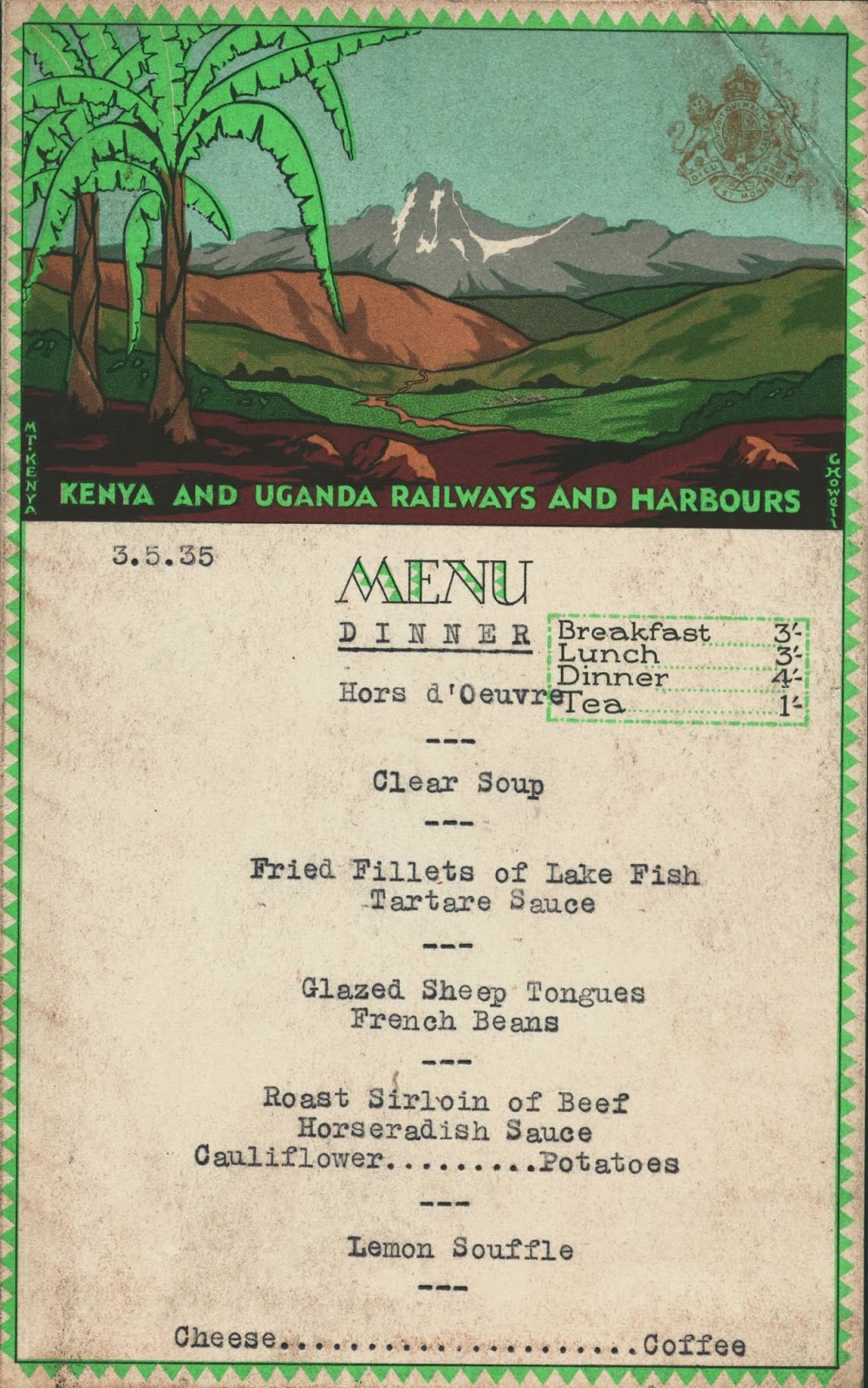
Menu from Leeson
collection
exhibition).

Gems from the collections sessions will be held each term which give staff and students a chance to get a closer look at material from the archives and rare book collections. The team will also be running tours of the building for those interested in finding out more about the Keppel Street building and the origins of the School.


In the Archives, we do more than look after the School historical collections. We manage MediaLibrary, the School’s image and multimedia database. If you need an image, just go to MediaLibrary: http://www.lshtm.ac.uk/library/archives/medialibrary/index.html,  log in with your School username and password and access over 25,000 images. There is also a public version of the database and we are always happy to answer enquiries from the public regarding our images. We are currently running a photo competition with the theme ‘Improving Health Worldwide’ which staff and students are encouraged to enter, for more details please see: http://www.lshtm.ac.uk/library/archives/medialibrary/2013_photo_competition.html
2013 Photo competition winner

The Archives Service also deals with Freedom of Information requests which kept us very busy in 2013, the School received 98 in total, which increased dramatically from the 43 received in 2012; and offers a records management service for the storage of records, there are plans to hold Document Destruction days in 2014 which encourage staff to organise and destroy records that are no longer required.

Finally, it will be an exciting year for the Research Data Management Support Service which is due to launch its website soon, other plans include developing the data repository, delivering training events for staff and students and providing more interesting seminars on research data management topics. For further information, please see the RDM blog at: http://blogs.lshtm.ac.uk/rdmss/

If you have an enquiry about the archives, please do get in touch at: archives@lshtm.ac.uk

Wednesday, 18 December 2013

Monkeys of the Month

While we all work hard here in the Library & Archives team we also like to indulge our creative side with animals, each month one member of staff customised our Monkey calendar and the fruits are below, we have been voting for our favourite Monkey and will be giving a prize later this afternoon during our Christmas Party. Enjoy!


January
 
February
 
March
 
April
 
May
 
June
 
July
 
August
 
September
 
October
 
November
 
December


Tuesday, 17 December 2013

Online catalogue of Peter Piot's archives now available

The archive collection of Professor Baron Peter Piot is now available online on the archive catalogue. The papers held at the School reflect his career in fighting epidemic disease not only through his epidemiological work on the Ebola virus and HIV/AIDS but also his role as Executive-Director of UNAIDS (1995-2008).


Peter Piot 

Baron Professor Peter Karcl Piot, was born on the 17th February 1949 in Louvain, Belgium. He studied medicine at the University of Ghent (achieving his M.D. in 1974) and after graduation moved to the Institute of Tropical Medicine, Antwerp, to work under Dr S. R. Pattyn. In 1976, he and his colleague, Guido van der Groen, were chosen from the School to join the WHO International Commission investigating the then unknown Ebola virus in Zaire (now Democratic Republic of Congo), having been part of the team that had isolated the virus.

In 1980 he received his PhD in microbiology and became Associate Professor of Microbiology and Head of the Division of Microbiology at the Institute. Based in Antwerp, he set up a number of international projects in Africa chiefly looking at the spread of the HIV/AIDS on the continent. In 1983, he helped establish the international project based in Kinshasa, known as Projet SIDA that was the initial source of epidemiological work on HIV/AIDS in Africa. Between 1986-1987 he became an Associate Professor, Department of Medical Microbiology at the University of Nairobi, Kenya.

The following year, he became chair of the Steering Committee on Epidemiology and Surveillance of WHO's Global Programme on AIDS. In 1991 he was elected President of the International AIDS Society and then left his position in Antwerp to move to Geneva to become an Associate Director of the Global Programme on AIDS, World Health Organisation. In 1995, he was elected Executive-Director of  the Joint United Nations Programme on HIV/AIDS (UNAIDS) and served in this position for thirteen years before leaving in 2008 to become Professor of Global Health, Imperial College London. In 2010, he was appointed Director of the London School of Hygiene and Tropical Medicine.


Archives

The papers held at the School reflect his career in fighting disease with fieldwork based on his epidemiological work on the Ebola virus and HIV/AIDS in Kinshasa. Correspondence files from his time as Professor of Microbiology in Antwerp provide an insight on the international network of medical experts working on the AIDS pandemic in the 1980's with conference papers on notable meetings such as the first African meeting on AIDS in Bangui, 1985. 

The majority of the papers in the collection relate to his tenure of Executive-Director of UNAIDS. The papers incorporate material relating to the establishment and governance of the organisation and also the working life of the Executive-Director through his speeches; correspondence; conferences; meeting notes; travel documents and also hold a rich source of working papers on significant developments in his tenure such as the South African AIDS epidemic; the formation of the Global Fund against AIDS, Tuberculosis and Malaria and the United State's
President's Emergency Plan for AIDS Relief (PEPFAR). Papers also include collected articles, newspaper articles and reports relating to Piot's career and various topics relating to the global strategy for the prevention of HIV/AIDS.

The collection can be viewed by appointment by contacting the archive service by email at the following address, Archives@lshtm.ac.uk.

Thursday, 12 December 2013

World AIDS Day 2013: Gems of the Collection revisited

This is a belated thank you to all those who attended both the Gems of the Collection and evening seminar on 2nd December to mark World AIDS Day 2013. The two events allowed us to showcase some of the items within the collections currently being catalogued in the School archives. It was great to see people engaging with the collections and also to meet a number of people who are currently studying or researching the disease.


The lunchtime Gems session attracted around 47 people and included items from each of the six collections along with a sample of the Library's HIV/AIDS pamphlets and books. Items included:


  • An array of documents relating to Peter Piot's tenure as Executive-Director of UNAIDS including the first newsletter of the organization and a series of his travel files that conveyed the hectic, global role the position entailed. The material also included a letter from former President Thabo Mbeki to Piot describing at length his understanding of AIDS in 2000, when the South African government would not endorse the view that HIV caused AIDS.


  • Within the AIDS Social History Programme material on display there was public health campaign material from both UK and European governments collected from the 1980s-1990s. 


 The Programme was co-directed by Professor Virginia Berridge and is a great resource for examining HIV/AIDS within the United Kingdom thanks to its mixture of publications and reports from central government, local government and voluntary groups about tackling the epidemic.


  • The papers of Professor Kaye Wellings' provide a wealth of information about AIDS public health campaigns in Europe and it's extensive newspaper clippings document the early reporting and hysteria within the popular press. 


          Relating to this the Centre of Sexual and Reproductive Health collection highlight the visual power of the AIDS public health campaigns through the posters, postcards, badges and condom packages produced by European countries in the 1980s-1990s.


          It also shows the range of mediums used to convey public health messages most notably the use of graphic novels in Belgium and Italy respectively.


  • This sample of the SIGMA research archives documents the lobbying efforts of the group to lower the age of homosexual consent to be equal to heterosexual age of consent in 1994. The archive contains a number of letters received from serving MP's both expressing their support and opposition to the amendment. 

Sunday, 1 December 2013

World AIDS Day 2013: Launch of AIDS awareness poster gallery on Flickr


To complement last night's excellent talk on the HIV/AIDS posters at the London School of Hygiene & Tropical Medicine, the archives has created an online gallery of  HIV/AIDS posters within our collection on Flickr, Global Visions: HIV/AIDS posters at London School of Hygiene and Tropical Medicine archives. The posters provide a snapshot of the diversity of designs and messages used in AIDS public awareness campaigns across Europe.


The majority of the posters were collected as part of the European Commission (EC) 'Concerted Action on Assessment of AIDS/HIV Prevention Strategies' project, 1989-1991, the purpose of which was to compare and contrast the different AIDS public health campaigns European countries. It was during the late eighties and early nineties that AIDS was a major concern to European countries as the number of cases rapidly increased and there was a high degree of anxiety and fear in the general population over this fatal disease.


Poster from 1989 the Swiss 'Stop AIDS' campaign that ran from 1987-1995, the poster translates as 'Without? Without me" and was one of a number of designs used to promote the use of condoms 

The posters show how public health campaigners and voluntary organisations tried to inform and change behaviour within the general community. The posters display a number of different strategies to convey their message, such as using cartoons to depict risky behaviour for conservative audiences; targeting an emotion response through the use of fear, humour and empowerment and positively representing at risk groups to de-stigmatise and counter misinformation about the disease.  

Friday, 29 November 2013

Exploring The Archive...

 Explore Your Archive Week kicked off at LSHTM Archives with a lunchtime Exchange of Experience featuring our Research Data Manager Gareth Knight and Archivist Victoria Cranna. Archivists and Librarians explored issues around management and preservation of research data.

Hotel Phoenix business card,  Copenhagen
Tuesday saw a very successful Gems of the Collection session on the theme of Explorers & Pioneers, held in South Courtyard.  Almost 100 staff and students browsed rare items from our collections, including details of Sir Ronald Ross's trip to Sweden to accept the Nobel Prize for medicine in 1902. Ross kept everything from his trip, including correspondence with travel agents, boat tickets, menus, hotel bills, and press cuttings. We even have an invoice from  a Swedish outfitters for a top hat, as he forgot to pack one!
We also showed  lists of food deemed essential for a stay in Ghana (Gold Coast) in 1922. The goods were ordered from the Army & Navy Co-Operative Society's Export Department, based in Victoria St, London, and were sent to Dr. JWS Macfie, then Director of the Medical Research Institute in Accra.

List of goods to be shipped to Ghana  for Dr J McFie
This list is part of the Macfie Archive, which was donated to the School by Dr. Macfie's nephew in 1984.

On Wednesday Victoria Cranna, the archivist, gave a lunchtime Tour of the Building, giving staff and students a chance to find out more about the history of LSHTM. The tour includes information on the School's origins (we were originally based in the London docks), architectural features of the current building, wartime damage, and new developments.

We finished the week with a booked-out evening viewing of 'Roads to Africa', the documentary of a 10 month expedition in 1936 to Uganda, Tanzania and Kenya led by Major Leeson, then a lecturer at LSHTM. He was accompanied by  assistant JD Gillett, who also acted as cameraman, and who added the film's voiceover shortly before his death in 1995.
The film showed fascinating footage of the team leaving Croyden Airport on their flight to Entebbe (which took 5 days), the assistants they hired, the local people they met throughout their trip, and the resilient Chevrolet car that apparently never broke down! The audience loved the archive footage of Africa in the 1930s and long-gone expedition  techniques.

Air ticket London -Entebbe 1936
Details of this and other expeditions  undertaken by LSHTM staff across the years can be found in the Archives: to find out more just contact us !

Thursday, 28 November 2013

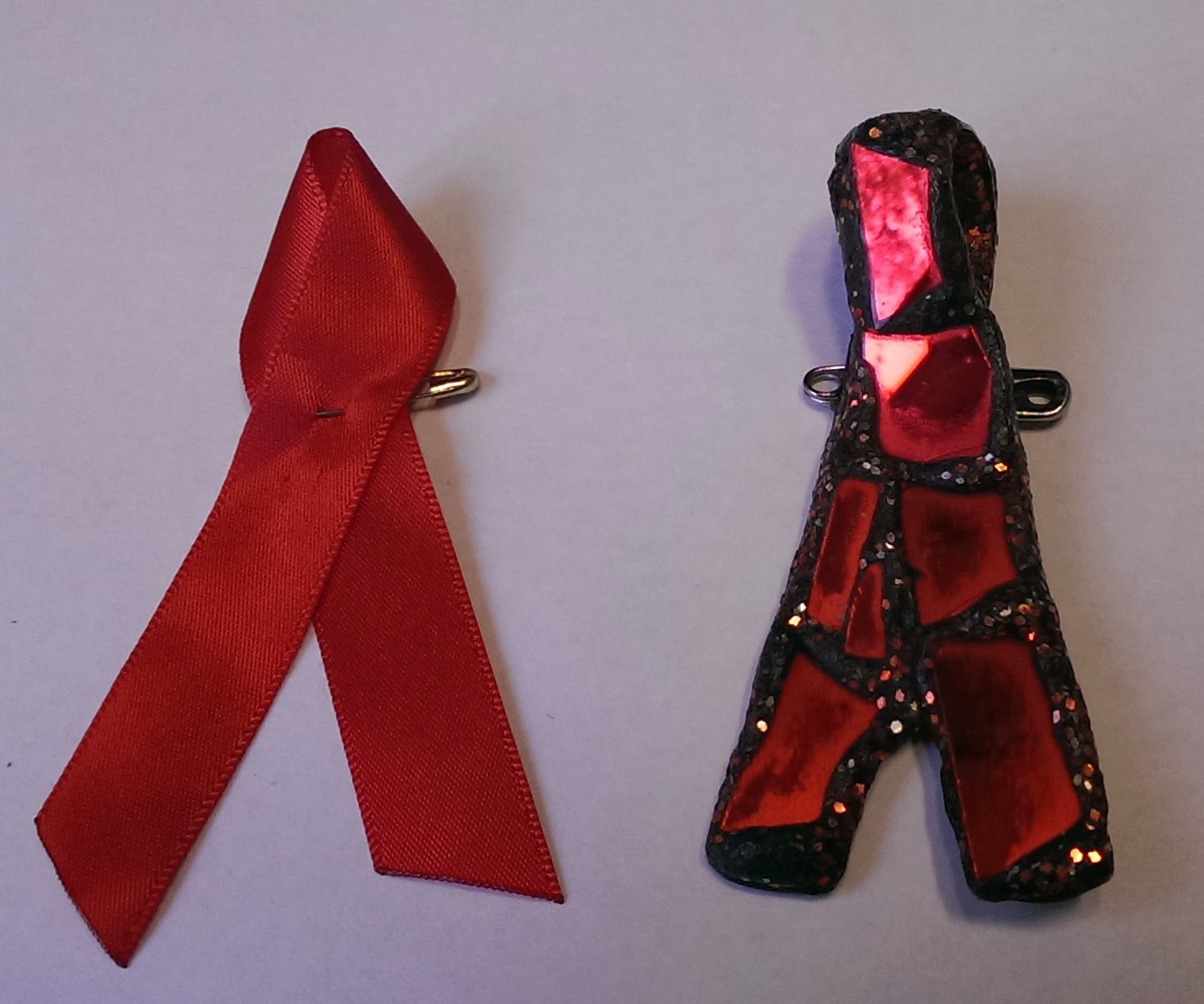
The Red Ribbon: A donation from Lyn Rothman, a friend of the School


With World AIDS Day soon approaching, it seems opportune to mention a special acquisition that the LSHTM Archive received this September. Following a visit to the archives to view the LSHTM HIV/AIDS collection by Lyn Rothman, the founder of AIDS Crisis Trust and current patron and board member of the Elton John AIDS Foundation, she kindly offered to donate a Red Ribbon pendant designed by her friend, Andrew Logan, the English artist and jewellery-maker.

We received, several weeks later, a parcel containing not only the AIDS Red Ribbon pendant designed by the artist but a note on the pendant from Andrew Logan that Lyn had asked him to write about his creation.


The pendant was designed when the first AIDS ribbons appeared and having seen many of his friends die from AIDS, Andrew felt it was a fitting celebration of their lives.

Polish AIDS awareness poster, c.1990s

The original red ribbon designed by New York-based Visual AIDS Artists Caucus in 1991 as a consciousness raising symbol, not as a commercial or trademark tool, and therefore the original creators wished to remain anonymous and the image is free of copyright.

The first red ribbon worn publicly was by Jeremy Irons at the 1991 Tony Awards and soon became renowned as an international symbol of AIDS awareness, becoming adopted as the symbol of World AIDS Day that same year.

To read more about the history of the Red Ribbon please visit: http://www.worldaidsday.org/the-red-ribbon.php


Thursday, 21 November 2013

World AIDS Day Events at LSHTM Archives


For this year's World AIDS Day the London School of Hygiene and Tropical Medicine archives will be hosting two events on the 2nd December 2013.


World AIDS Day: Global Visions


Monday 2rd December, 6pm-7pm, Manson Lecture Theatre, London School of Hygiene and Tropical Medicine, Keppel Street, London, WC1E 7HT


Evening seminar presenting the HIV/AIDS poster collections held by the London School of Hygiene and Tropical Medicine archive and the Wellcome Library.  The Wellcome Library holds one of the world’s largest digitised AIDS poster collections, with over 3000 posters. The LSHTM archives holds sizable collection of its own along with collected campaign ephemera and collected papers. Through the combined archives we shall explore changing attitudes to the disease and the dramatically contrasting cultural attitudes to sex from across the globe.

This joint event organised by the Wellcome Library and the LSHTM Archive will explore the digital and physical poster series of both collections and explore the key themes and contexts of these poster collections through our speakers, Professor Kay Wellings, Professor of Sexual & Reproductive Health Research at LSHTM and donor of the LSHTM poster collection and Julia Nurse, Content Officer at the Wellcome Library and cataloguer of the Wellcome AIDS poster collection.


World AIDS Day: Gems of the HIV/AIDS Collection


Monday 2nd December, 12-2pm, Manson Lecture Foyer, London School of Hygiene and Tropical Medicine, Keppel Street, London, WC1E 7HT


The archives and rare book collections will showcase a display of library and archive material from our extensive HIV/AIDS collections. This includes posters, badges, condoms and other ephemera from the Centre for Sexual and Reproductive Health (CSRH) collection; UK HIV/AIDS campaign material from the AIDS Social History Programme (1988-1994) and the archives of LSHTM Director, Peter Piot, whose archives reflect his the twenty five year experience in combating HIV/AIDS epidemic as both an epidemiologist and then as Executive-Director of UNAIDS, 1996-2008. 

The event is free and open to all. For more information about the World AIDS Day events or the HIV/AIDS archive collection please contact us, archive@lshtm.ac.uk


Selection of ephemera from the Centre for Sexual and Reproductive Health collection


Tuesday, 19 November 2013

World Toilet Day: Dr James Balfour Kirk's guide to excretion in the tropics


To celebrate World Toilet Day we thought it would be appropriate to quickly highlight one of our archival manuscripts on sanitary care in the tropics. Written by Dr James Balfour-Kirk to his godson who was travelling through the tropics with his family in 1925, Kirk provides a candid point by point guide to surviving in the tropics including chapters on personal hygiene, keeping cool, rest and disease and the disposal of excreta. It is the latter that it seems appropriate to dwell on with Balfour-Kirk describing the ‘Filth Diseases’ such as ‘Cholera, the dysenteries and typhoid fever, [as] preventable diseases, yet they are the cause of enormous loss of life in the tropics’. He elaborates by adopting a military analogy to describe the course of typhoid: how it lurks in silence in the tissues before composing itself for a final assault leading to a ‘Battle Royal’ that leaves the victim physically prostrate and persists for several weeks followed by a long period of convalescence, or the 'post-war reconstruction period', which Balfour-Kirk describes as a “bloody waste of time”.


He apologetically explains that filth diseases can only be contracted by eating and drinking “infected excrement within a comparatively short time after it has been voided by a patient or a carrier of the disease”. He admonishes himself for the “brutally crude” way of expressing himself before outlying the universal soil pollution that persists in the tropics where human excrement is used for fertilizer and water supplies are easily contaminated and everything is exacerbated by domestic flies (they have their own chapter).


The only solution is to boil all water to be used and cook all your food thoroughly. He adds finally that you shouldn't forget to boil your ‘tooth water’ e.g. water for brushing your teeth. Make sure the house boy is not the "lazy type" and provides clean water by testing him, by adding a few drops of eau-de-Cologne in the toilet water jug in the morning and seeing if it smells of cologne in the evening. If it doesn't, Balfour-Kerr suggests you may “have up” the “house-boy as the occasion and the custom of the country permits’.


Whilst, the manuscript is very much a product of the colonial era, the persistence of water-borne infections and the importance of functioning latrines is still as relevant today as it was then. 

Wednesday, 16 October 2013

Peter Piot and the Ebola outbreak in the Yambuku in 1976


Within the archives of Peter Piot, surrounded by decades of material surrounding HIV/AIDS was a small box file, simply entailed, ‘Ebola’. Within it were papers relating to his work with the International Medical Commission in Zaire (now Democratic Republic of Congo) to investigate an unknown hemorrhagic fever that erupted spontaneously in 1976. The disease infected 318 people, killing 280 people in a two month period. It’s lethalness was only rivalled by that of rabies and spread widespread fear across the region. As a junior member of the Department of Microbiology Department at the Institute of Tropical Medicine, Antwerp, Peter Piot’s life and career was dramatically affected by the emergence of this terrifying epidemic.

Newspaper cutting of the ITM team with Guido van der Groen, Peter Piot and Dr Stefaan Pattyn


The story of Piot’s involvement is comprehensively told in his memoir, No Time to Lose, but his archives convey the scope of his epidemiological work within the Yambuku region. Piot became a member of the International Medical Commission after the he and his colleagues at the ITM had identified a new virus from the blood samples taken from the Flemish nun who had caught the disease. What is truly terrifying about the account is the lack of precautions that were taken with the highly infectious blood from it turning up, semi-thawed in a thermos couriered on a passenger airline to the almost accidental contamination of one of his colleagues when a test tube of the virus smashed onto the floor and covered the shoes of his colleague, Rene Delgadillo. 


Electron microscope image of the Ebola virus


The alarming reports from Zaire along with the identifying a lethal new virus caused the World Health Organisation to mobilise an International Commission to investigate and contain the outbreak. Members of the ITM were drafted in to go to Kinshasa and Piot was one of them. He was a relative novice at the time and had not been to Africa nor even had a valid passport (having cut out the picture for a squash membership card). However, he leapt at the opportunity to go and reached Kinshasa on October 18th. President Mobutu Sese Seko had ordered the entire Bamba region to be quarantined and there was no information from the region regarding the severity of the epidemic. It was agreed that a small expeditionary team would go in and investigate; Peter Piot volunteered to be on it.


The archives note the epidemiological procedures the expeditionary party took during this period. Using they’re airlifted land rovers to visit local hospital and affected villages the team same came to some preliminary conclusions about the epidemic. Firstly, the peak of the epidemic had already been reached and the team could not identify any new cases; the main source of transmission was hypothesized and later proved to be the Yambuku hospital ran by the Flemish nuns, unwittingly the hospital staff had passed on the infection to a host of people through the re-use of syringes; whilst other cases seemed to be skin to skin transmission especially through preparation of the dead, the initial vector of the disease was not identified.

 
Map of the villages visited in the Yambuku region (1976)


On hearing the news, the international commission departed to the region to carry out more extensive epidemiological search and be certain that the disease was no longer a threat. Despite killing 88% of its victims the disease magnitude was deceased thanks to village elders imposing their own cordon sanitaire measures to prevent the spread of disease to surrounding areas and local people realising that the hospitals were the major source of the infection.


The experience with the Ebola virus had quite a transformative effect on Peter Piot’s life. Along with being grateful to being alive, he felt vindicated in his decision to pursue epidemic disease and eager to advance in his profession and shortly afterwards moved to America.

Wednesday, 18 September 2013

Cataloguing the paper of Dr Peter Piot: the archives of Projet SIDA (1983-1992)


Having finished repackaging the archives of Peter Piot for the past couple of weeks I have been cataloguing this collection. Cataloguing often requires a degree of familiarity with the contents in order to make accurate and informed descriptions and therefore it necessitates background reading of the subject or individual. Fortunately, for this collection I have the interesting and compelling account by the man himself in the form of his memoir, No Time to Lose (2012). The chapters that really stick out are his fieldwork in Africa on both the Ebola Virus and HIV/AIDS as they resonate the thrill and the horror of studying a new infectious disease in the middle of an epidemic. The archives mirrors the book with significant holdings on both diseases. In this post, I would like to concentrate on Projet SIDA, the Zairean-American-Belgium AIDS research project that ran from 1984 to 1992. 


Clinical definition of AIDS (c.1983)
In No Time To Lose, Peter Piot recalled how a number of the patients he attended at the Institute of Tropical Medicine, Antwerp exhibited AIDS-like symptom. The significance at the time was these patients were not the previously identified risk groups (the virus had only recently been named as acquired immunodeficiency syndrome was coined, the virus was previously known as the '4 H' virus after the confirmed communities affected: homosexuals, heroin users, hemophiliacs and Haitans) but all had ties or had spent time in Zaire. He knew he needed to go to the country to find out what was going on and was fortunate to encounter two US epidemiologists with the same assessment. Dr Tom Quinn and Dr Richard Krause, of the U.S National Institute of Health (NIH), they had both noticed the link with Zaire when investigating the AIDS outbreak in Haiti and in a cafe in Geneva, the three agreed to launch an investigation in the country. They were joined by Joseph McCormick, of the U.S. Centre for Disease Control (CDC) and arrived in Kinshasa, then Zaire in October 1983. 


When they arrived in Memo Yamba Hospital the epidemic was worse than they could imagine. Piot noted that the team saw fifty people alone on the first morning with AIDS symptoms which was a huge number for 1983 with only 2000 reported cases, many of them retrospectively. The team began to collect and examine blood samples from the patients and sent the samples to the team headed by Professor Luc Montagnier of the Pasteur Institute in Paris.The results of the tests confirmed the presence of AIDS with 97% positive results from the original sample. With this information the team and the other epidemiological and clinical information gathered the team produced an article that was published in the Lancet in 14th July 1984 confirming the first heterosexual HIV/AIDS cases in Africa. 

Manuscript note by Dr Piot relating to the LAV test results of Dr Montagnier for patients from the Memo Yamba Hospital


On the back of this preliminary investigation, it was decided that a major international project should be launched that would be known as Projet SIDA. The US health agencies, CDC and NIH provided the bulk of the funding with the third partner being the ITM, led by Piot. The project began in 1984 with it's first director being Dr Jonathan Mann, who would later become the Director of the World Health Organisation's Global Programme on AIDS, the precursor to UNAIDS. In it's time Projet SIDA employed over three hundred people, a number of them being Zairean doctors and hospital staff who former director, Dr Robin Ryder, described as the 'backbone' of the project. The project produced over 120 publications over the course of it's duration and was cited in thousand abstracts. It ended in 1992 as both the Belgium and US governments withdrew it's nationals in the face of the escalating nature of the Ugandan civil war. 


The archive of Projet SIDA provides a glimpse of the clinical work of the ITM during the breadth of the project. This includes material collected from the preliminary study in 1983 and later reports, blank medical questionnaires and project documentation along with numerous correspondence between Piot and project staff members and project partners, notably the former directors such as Jonathan Mann, Dr Robin Ryder and Dr William Heyward. 


To read more about the project there is an excellent article, by Joe Cohen, entitled, 'The Rise and Fall of Projet SIDA', published in Science is available online (and where a number of my references are from) at the following: http://www.sciencemag.org/content/278/5343/1565.full